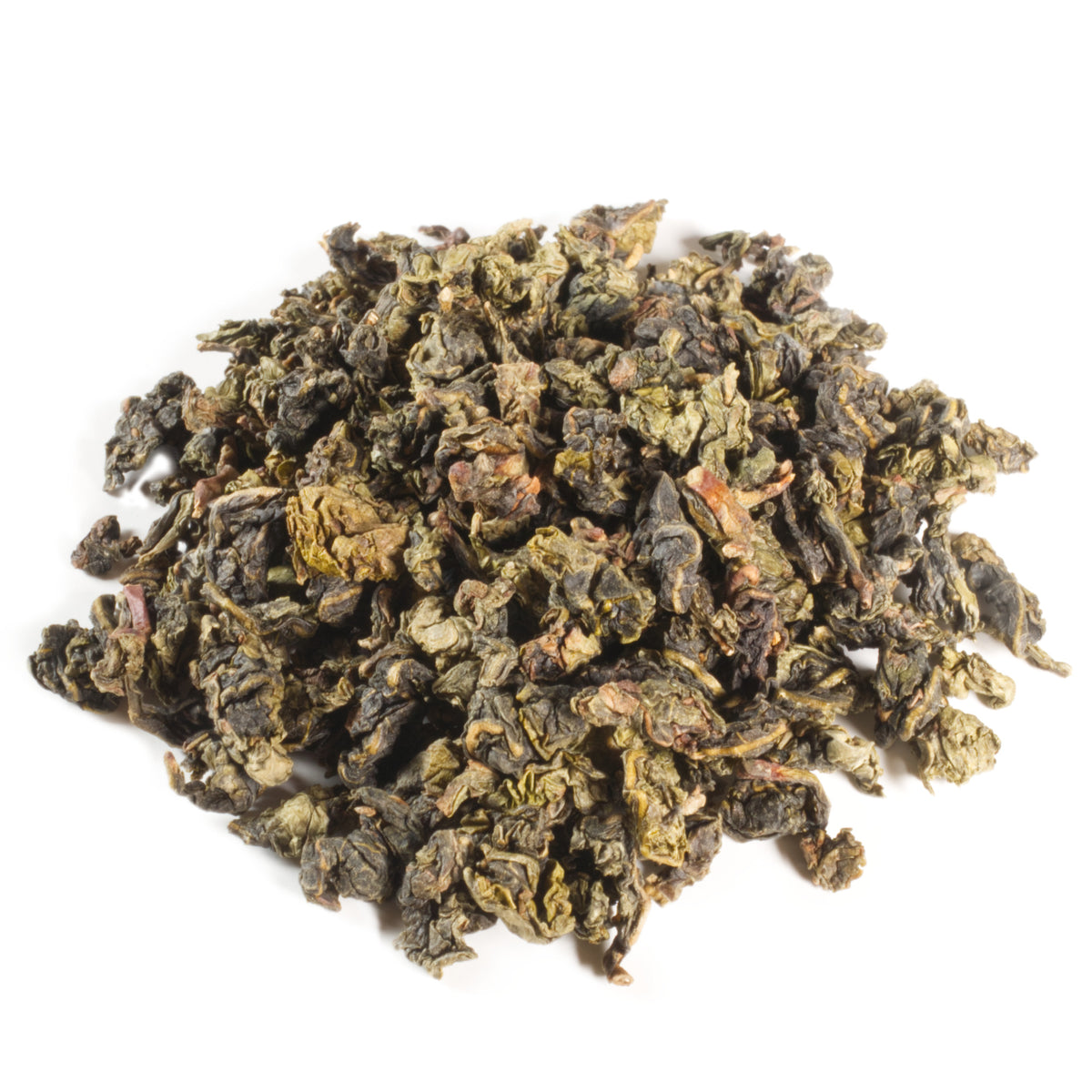
Oolong is a wide category. On one end you have dark, roasted rock oolongs — mineral-heavy, almost coffee-like in depth. On the other end, green-style oolongs: lightly oxidized, floral, bright. Jade Oolong is firmly on the lighter end of that spectrum.
"Jade" isn't a protected designation for one specific tea; it's a style name that signals a greener, less-roasted character. Think of it as sitting closer to green tea than to a Da Hong Pao — same family, completely different cup. The distinguishing step is restraint: the leaves are bruised at the edges to start oxidation, then fixed quickly before it travels far. What you get is a tea that holds some of the freshness of a good green while adding the floral complexity and body that only oolong delivers.
Our Jade Oolong comes from the mountains of Hubei Province. Classic Tieguanyin-style oolongs are associated with Anxi County in Fujian — the coastal province famous for greener oolongs. Our tea takes the same style from a different mountain. We spent years looking before we found this one; it was the first oolong we were willing to sell. Hubei's altitude and growing conditions produce a leaf that's noticeably floral and clean, with a sweetness that doesn't need any help.
Brewing: 210°F, 4 minutes, 1.5 teaspoons (3g) per 8 oz cup. Pour off the first short steep as a rinse — this opens the leaves and mellows any initial edge. After that, you'll get three or four solid infusions. Adjust the leaf amount to taste: lighter is more floral, heavier brings out more body. The tea is forgiving; a few extra minutes in the pot won't make it bitter.
Certifications: USDA Organic, MOFGA Organic. No synthetic pesticides or herbicides. Grown by a worker-owned cooperative we source with directly.
What does Jade Oolong taste like?
Floral, mellow, and naturally sweet — light citrus, a hint of toasted grass, a clean finish. The liquor brews green-gold. It's less roasted than a Da Hong Pao, less grassy than a green tea; most people find it approachable from the first cup. Recurring descriptions from customers: floral, smooth, buttery, subtly sweet.
Is this a Tieguanyin (Tie Guan Yin)?
It's made in the same greener-oolong style, but it isn't a Tieguanyin. Classic Tieguanyin comes from Anxi County, Fujian. Our Jade Oolong comes from Hubei Province — different mountain, same light-oxidation approach. We call it Jade Oolong because that's what it is: a house expression of greener-style oolong that stands on its own.
Is Jade Oolong a good everyday tea?
That's exactly what it's sourced for. Kevin called it "priced for a perfect daily drinker, but so much more than that — as good or better than oolongs costing twice as much." It's forgiving enough to brew at a desk and light enough to drink all day without getting heavy.
How much caffeine is in Jade Oolong?
Oolongs have measured about 12–49 mg per cup in published lab analysis (not our own tea), well under a typical coffee. Combined with L-theanine (naturally present in all tea), the energy is sustained and calm rather than a spike.
Can I steep the leaves more than once?
Three or four good infusions is standard. Pour off the first short steep as a rinse, then brew 4 minutes, then 5–6 for subsequent steeps. Each infusion shifts slightly — a little more body, a little less brightness. Kin gets five rounds out of it regularly.
I normally drink green tea — will I like this?
Probably yes. Christina put it directly: "I normally don't like oolongs, but this oolong is superb. I am a serious green tea drinker and I drink this tea every day." The light oxidation means the gap between a good green and this tea is smaller than you'd expect.